Hig
The Dog StarsHig is a pilot, hunter, and survivor who understands that staying alive depends on both watchfulness and connection. He keeps The Beast running, stores 100-octane low-lead fuel, and anticipates attacks, yet he does not see himself as a natural killer. His uneasy partnership with Bangley gives each man what the other lacks; his grief for his dog Jasper and for a world emptied of familiar life reveals the cost of that bargain.
Identity and Background
Hig gives his name plainly: one name, enough. He was born in the Year of the Rat and identifies himself through a pilot’s license number rather than a serial number. Before the collapse, he went to college and wrote thirty poems, twenty-three of them for his wife, Melissa. His mother loved him; his father was absent; an uncle taught him to fish. He and Melissa had no children, though she was pregnant. These brief facts sketch a life built around affection, loss, and the habits that remain meaningful when ordinary records and institutions no longer do.
His practical identity is equally specific. Hig maintains The Beast and keeps fuel available, while remaining alert to possible attacks. He owns a gun and can hunt for food, but says he does not have the stomach for killing. Jasper, his dog, is another part of his security: Hig calls him his last line of alarm. That dependence is not merely tactical. Jasper belongs to the intimate world of routine and companionship that Hig is trying to preserve amid constant danger.
Fishing is the clearest measure of what the changed world has taken from him. Hig once loved fishing for trout more than almost anything. He imagines waking in tears at the knowledge that every trout is gone, and recalls that the last one swam upriver, perhaps seeking cooler water. He names the brook, rainbow, brown, cutthroat, and cutbow varieties as lost, setting this disappearance beside the departure or absence of other animals. His grief gives ecological loss a personal scale: the missing fish are not an abstract sign of collapse but the end of a beloved practice and of the possibility that one survivor might still appear in a creek.## Flight, Survival, and the Land Flying is not simply Hig’s means of travel. Looking back on his early training, he describes it as something he seemed meant to do, and locates the pleasure less in a fantasy of limitless freedom than in the way the earth becomes legible from above. Mountain slopes resolve into creeks, ravines, ridges, and valleys; settlements gather around rivers and their meeting points. From the air, he can read the terrain as a connected pattern, much as a person on foot learns where to place each step along a creek bank.
He is especially drawn to the order visible from the cockpit. Farms occupy squared sections; roads follow compass directions; trailer parks, tract homes, baseball diamonds, and junkyards all form patterns in the landscape. The memory of that arrangement contrasts with the changed world he inhabits. For Hig, the view from The Beast carries both practical knowledge and a recollection of a world that once seemed to have a place for everything. His eye remains that of a pilot, even when what it sees is damage and absence.
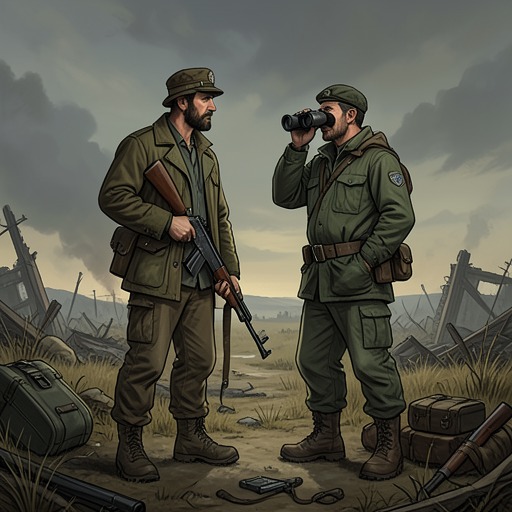
On the ground, hunting and fishing offer different kinds of sustenance. When rabbits and sunfish from the pond become tiresome, Hig hunts deer, but he also goes into the forest because being there feels to him like a church. The dead forest and the green forest, the deer beds and the creeks, are part of a landscape he attends to closely. He still hopes to see a trout: even one fingerling, or one large survivor, would matter. The wish does not restore what is gone, but it keeps his attention turned toward the possibility of life.## Bangley and the Work of Survival Bangley is Hig’s only neighbor and the other half of a carefully divided defense. Hig is the pilot and the eyes; Bangley supplies the guns and the muscle. Each knows the other’s limitation: Bangley cannot fly, while Hig cannot bring himself readily to kill. Hig believes that, without their partnership, either one of them would probably die—or both would. Their arrangement is therefore more than convenience. It makes two differently equipped and differently disposed men into a workable unit.
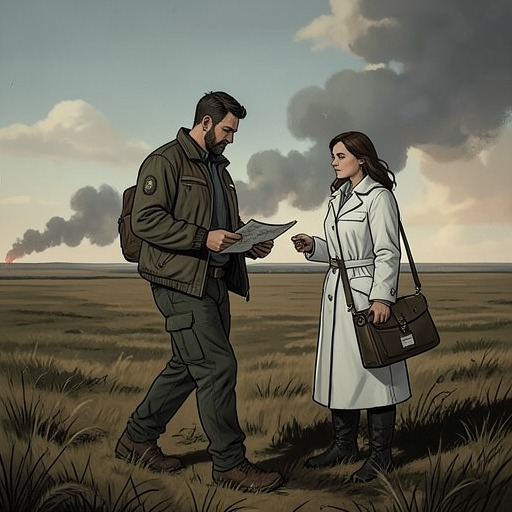
That dependence does not erase the strain between them. Bangley considers the danger posed by a woman approaching Hig and imagines the possibility of betrayal; Hig is startled by how far his neighbor’s suspicion extends. Still, he recognizes the practical value of Bangley’s vigilance and says that Bangley has saved him repeatedly. Their bond asks Hig to live alongside a harder survival code without fully sharing it. The partnership protects him, but it also continually tests his aversion to violence.
The test is not hypothetical. Hig recounts killing a boy and other people, placing these acts among the losses that have brought him to an apparent end of endurance. When asked why he flew beyond the point at which he could safely return, he does not offer a grand purpose. He explains that Jasper had died, that he had received a radio transmission three years earlier, and that hunting, fishing, and further losses had left him with no other idea. His answer makes the flight an act shaped by grief and limited possibility rather than by certainty.
Hig nevertheless commits to continuing the journey. He agrees that the group will go to Grand Junction, inspect the tower and airport, obtain aviation fuel, and then fly back to Bangley. He does not claim to know how to take off with everyone from the meadow. The response he receives is that they will manage it, even if it requires help operating the rudder pedals. The exchange shows Hig’s uncertainty alongside the trust others place in his skill: he knows the aircraft, but cannot guarantee that every difficult circumstance will yield to knowledge.## Loss, Companionship, and Change Jasper’s death marks a decisive rupture. Hig names it as the reason he went past the fuel-return threshold, and tells of the dog alongside his memories of hunting, fishing, killing, and accumulated loss. Jasper had been both companion and alarm system; his absence removes not only a loved animal but also a familiar protection. Hig’s explanation is spare because he cannot give the journey a more coherent rationale: he had no other idea.
Later, Bangley is found severely wounded, unable at first to do more than recognize Hig and touch his beard. His recovery is uncertain for weeks. Cima stays with him, splints his shattered leg, tends his side, and gets water and Sprite into him with a turkey baster. Hig watches her work with a respect grounded in the care itself: she checks the splint, changes the bandages, and speaks to Bangley with humor and regard, as one friend to another. The scene places practical healing beside the armed vigilance that has defined their survival. For Hig, care is a skill with its own discipline and authority.
His relationship with Cima becomes a new source of closeness. He remembers watching her tend Bangley, work in the garden, and move between the hangar and the lambs. They make a willow screen and turn two flannel sleeping bags into a shared bed on a mattress brought from Hig’s house. They sleep holding each other, a form of ease he says he had never found with anyone before. At night he still wakes and watches the stars, but now Cima’s presence beside him changes the experience: he feels spared and blessed.
That happiness does not cancel grief. Hig remains conscious that their safety and health are uncertain, and that the present may be fleeting. He understands the condition through a recurring doubleness: flight can feel serene while remaining dangerous, and the speed of The Beast can seem almost motionless. Hig’s movement is not from fear to safety or from sorrow to uncomplicated recovery. Rather, he becomes capable of receiving companionship while knowing it cannot guarantee a future. His story holds together the watchfulness of the survivor, the pilot’s attention to patterns, and a renewed willingness to be close to another person.